
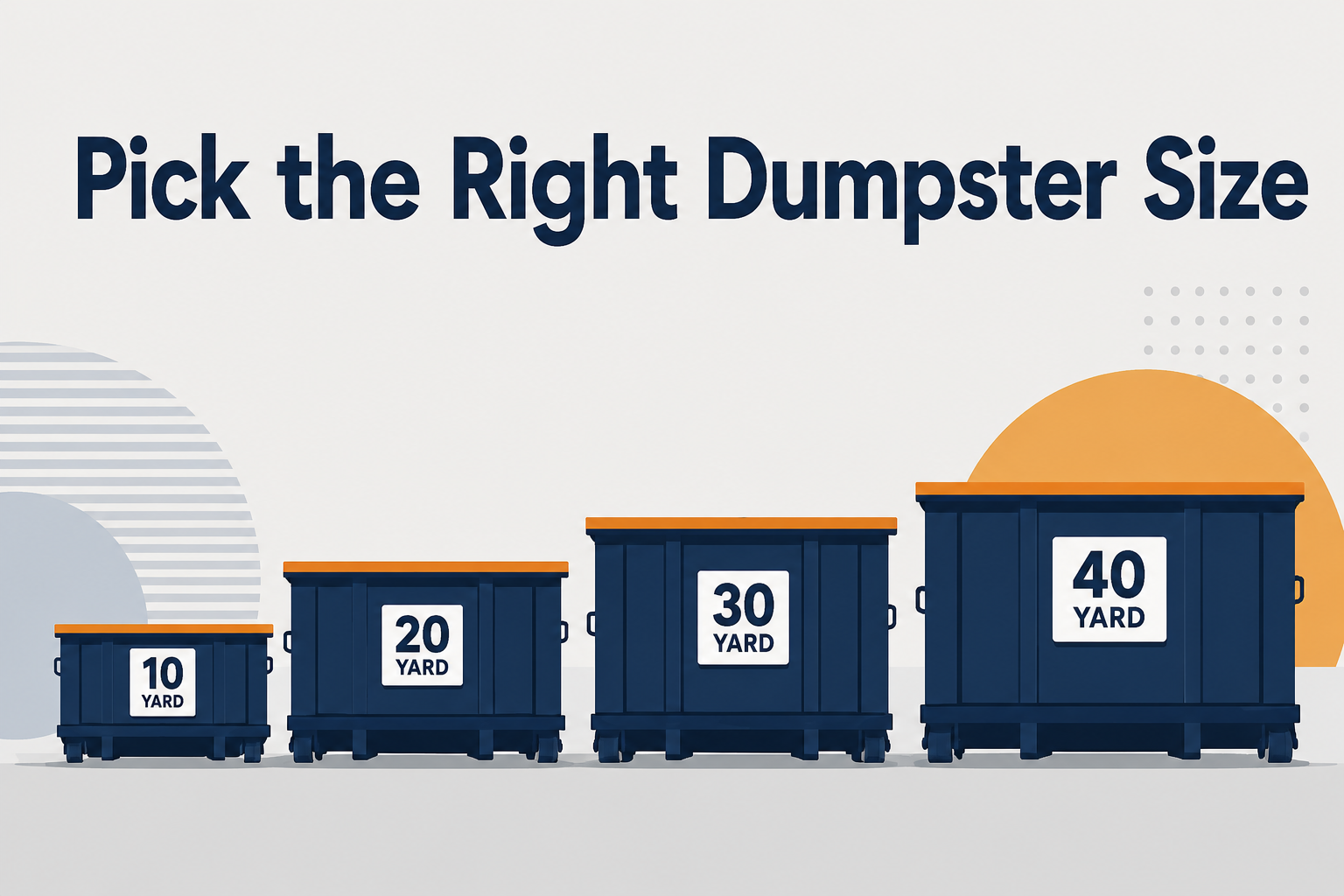
What Size Dumpster Do You Need for a Home Renovation?
Choosing the right dumpster size is one of the easiest ways to keep a home renovation on budget and on schedule. Rent one that’s too small and you’re paying for a second haul or a swap-out; rent one that’s too big and you’ve spent money on space you never filled. For most whole-room remodels, a 20-yard dumpster hits the sweet spot — but the right answer depends on what you’re tearing out and how much of it there is.
At Dump IT LLC, we deliver dumpsters across Indianapolis and the surrounding areas every day, and the question we hear most from homeowners is simply “what size do I need?” This dumpster size guide for home projects breaks down each option by project type, debris volume, and cost so you can book the right container the first time and avoid surprise overage fees.
Below, we’ll walk through what each dumpster size actually holds, which renovations call for which size, and a simple method for estimating your debris before you book.
A 20-Yard Dumpster Fits Most Home Renovation Projects
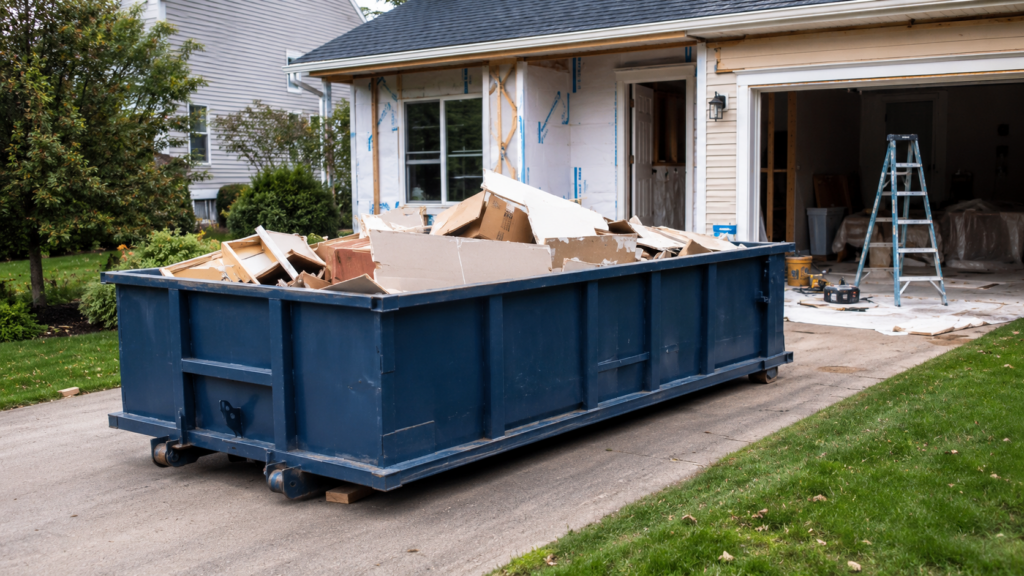
For the average home renovation, a 20-yard dumpster is the most popular and practical choice. It holds roughly 20 cubic yards of debris — about the equivalent of six pickup-truck loads — which comfortably covers a kitchen remodel, a bathroom gut, flooring removal across several rooms, or a mid-sized decluttering job.
In our experience serving Indianapolis homeowners, people tend to underestimate how quickly renovation debris adds up. Drywall, cabinetry, old tile, and subflooring are bulky and heavy, and a renovation that looks small on paper often fills more space than expected. A 20-yard container gives you breathing room without paying for the capacity of a 30- or 40-yard roll-off you won’t use.
That said, the 20-yard is a starting point, not a universal answer. Smaller cleanouts can run cheaper with a 15-yard, while full-house gut jobs or additions usually need a 30- or 40-yard. The next section shows exactly what each size handles.
Dumpster Sizes Explained: 15, 20, 30, and 40 Yards
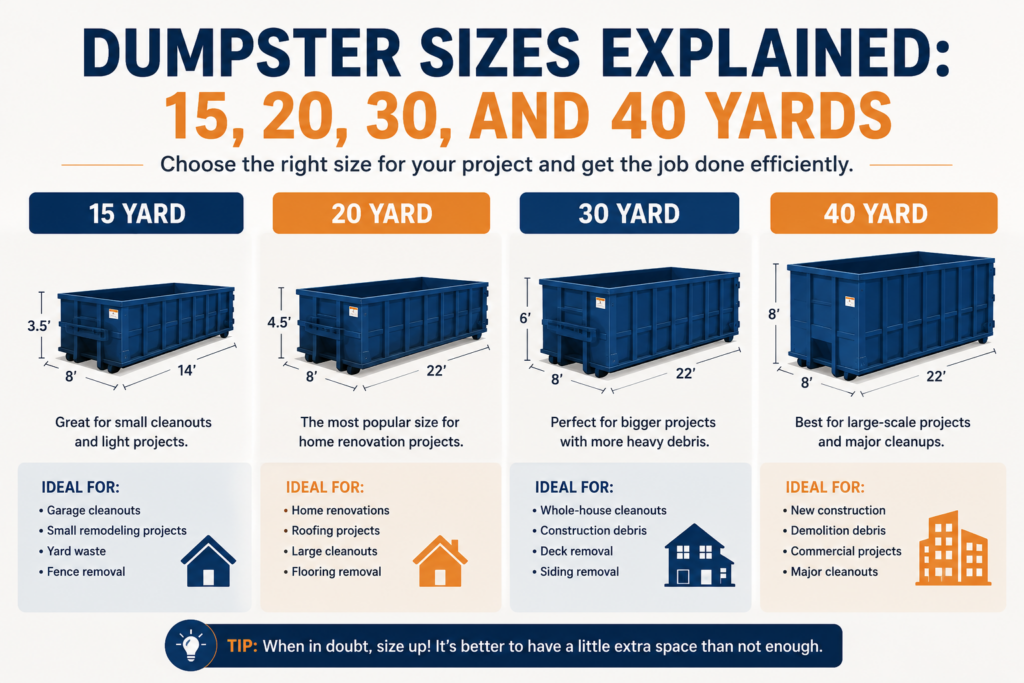
Every dumpster size is measured in cubic yards of volume, and each step up roughly corresponds to a larger or heavier renovation. Dump IT LLC offers four roll-off sizes, and the table below shows what each one typically holds and the projects it suits best.
| Dumpster Size | Approx. Capacity | Pickup-Truck Loads | Best For |
|---|---|---|---|
| 15 Yard | 15 cubic yards | ~4–5 loads | Single-room remodels, small bathroom renovations, garage or attic cleanouts, heavy debris like concrete or dirt |
| 20 Yard | 20 cubic yards | ~6 loads | Kitchen remodels, full bathroom guts, flooring removal across several rooms, mid-sized cleanouts |
| 30 Yard | 30 cubic yards | ~9 loads | Multi-room renovations, large additions, whole-floor remodels, new construction debris |
| 40 Yard | 40 cubic yards | ~12 loads | Whole-house gut renovations, major commercial jobs, large-scale demolition and construction |
One important note: heavier materials like concrete, brick, tile, and dirt have weight limits that matter more than volume. For dense debris, a smaller 15-yard dumpster is often the right call even if it looks like you have room to spare — overloading by weight is what triggers extra fees. Our team can flag this when you book if you tell us what you’re throwing out.
What Size Dumpster Do I Need for a Kitchen or Bathroom Remodel?
A standard kitchen or bathroom remodel almost always fits in a 20-yard dumpster, while a small single-bathroom refresh can fit in a 15-yard. The difference comes down to how much you’re demolishing and whether cabinetry and appliances are part of the haul.
Here’s how the most common remodels typically break down:
- Small bathroom refresh (vanity, toilet, tile, drywall) — a 15-yard dumpster is usually plenty.
- Full bathroom gut (tub, surround, flooring, fixtures) — a 15- or 20-yard, depending on tile and concrete weight.
- Mid-sized kitchen remodel (cabinets, countertops, flooring, appliances) — a 20-yard is the reliable choice.
- Large kitchen plus adjacent rooms — step up to a 30-yard to avoid a second pickup.
If you’re remodeling more than one room at once, it’s almost always cheaper to size up to a single larger dumpster than to rent two smaller ones or pay for a mid-project swap.
Match Your Dumpster Size to the Scope of Your Renovation
The most reliable way to choose a dumpster size is to match it to the total scope of the project rather than a single room. A whole-house renovation generates far more debris than the sum of its individual rooms because demolition, packaging waste, and old materials accumulate over weeks.
Use these project-based guidelines as a quick reference:
- 15 Yard — one room, a small bath, a garage cleanout, or any job with heavy concrete and dirt.
- 20 Yard — a kitchen, a full bathroom, or flooring and drywall across two to three rooms.
- 30 Yard — a multi-room remodel, a home addition, or a full main-floor renovation.
- 40 Yard — a full gut renovation, a large addition, or major demolition across the whole home.
When you’re genuinely between two sizes, size up. The cost difference between adjacent sizes is small compared to the cost and delay of ordering a second dumpster mid-project.
How Do You Estimate the Volume of Renovation Debris?
You can estimate renovation debris by picturing your waste in pickup-truck loads, since one standard truck bed holds roughly three cubic yards. If you expect about six truckloads of material, a 20-yard dumpster is your match.
Follow these steps to size your debris before booking:
- List what’s coming out — cabinets, flooring, drywall, fixtures, tile, and any furniture or appliances.
- Estimate in truckloads — mentally group the debris into full pickup-truck beds (about 3 cubic yards each).
- Factor in material weight — if much of it is concrete, tile, or dirt, lean toward a smaller size to stay under weight limits.
- Add a buffer — renovations almost always produce more waste than planned, so round up rather than down.
Not sure where you land? Tell our team what you’re working on when you book, and we’ll recommend the right size based on thousands of local deliveries.
Avoid Overage Fees by Choosing the Right Size the First Time
The two most common causes of unexpected dumpster costs are exceeding the weight limit and overfilling past the container’s fill line. Both are easy to avoid with a little planning, and choosing the correct size up front is the single biggest factor.
A few practical tips from our crews to keep your rental affordable:
- Keep all debris level with or below the top rail — dumpsters can’t be hauled safely if material sticks out above the fill line.
- Break down bulky items like cabinets and shelving so they pack flat and use space efficiently.
- Separate heavy materials like concrete and dirt, which may be better suited to a dedicated smaller dumpster.
- Don’t include prohibited items such as paint, tires, batteries, or hazardous chemicals — ask us what’s allowed before tossing them.
Because Dump IT LLC offers transparent, upfront pricing with no hidden fees, knowing your size in advance means the number you’re quoted is the number you pay.
Frequently Asked Questions About Home Renovation Dumpsters
How much does it cost to rent a dumpster for a home renovation?
Dumpster rental cost depends on the size you choose, your rental period, and the weight of your debris. Dump IT LLC provides transparent, upfront pricing with no hidden fees, so you’ll know the full cost before you book. For an exact quote on any size, you can book online or call our Indianapolis team directly.
How long can I keep a renovation dumpster?
Most home renovation projects span one to two weeks, and rental periods are typically built around that timeframe. If your project runs long, let us know and we can work out an extension. Booking with a realistic timeline in mind helps you avoid paying for days you don’t need.
Do I need a permit to put a dumpster in my driveway?
If the dumpster sits entirely on your own property, such as your driveway, you generally do not need a permit. A permit is usually only required when a dumpster is placed on a public street or sidewalk. Rules vary by municipality, so check with your local Indianapolis-area authority if you plan to place it on public land.
What can’t I put in a renovation dumpster?
Prohibited items typically include hazardous materials such as paint, oil, chemicals, batteries, tires, and certain appliances containing refrigerants. These require special disposal and can’t go in a standard roll-off. If you’re unsure about a specific item, ask our team when you book and we’ll point you in the right direction.
Is it better to rent one large dumpster or two small ones?
For most renovations, one appropriately sized dumpster is more cost-effective than two smaller ones or a mid-project swap-out. Each delivery and pickup carries its own logistics, so sizing up once usually beats renting twice. When you’re between two sizes, choosing the larger one is the safer, cheaper bet.
Choosing the Right Dumpster Makes Your Renovation Easier
The right dumpster size keeps your renovation moving without the cost of an oversized container or the headache of running out of room. For most homeowners, a 20-yard dumpster covers a kitchen or bathroom remodel, a 15-yard handles single rooms and heavy debris, and 30- or 40-yard roll-offs are built for whole-house projects and additions. When in doubt, size up — and factor in weight for dense materials.
When you’re ready to clear the debris, Dump IT LLC makes it simple with same-day dumpster rentals, easy online booking, and straightforward pricing across Indianapolis and the surrounding areas. Tell us about your project and we’ll help you land on the perfect size so you can focus on the renovation, not the cleanup.