Junk That Requires a Dumpster: The Complete Guide to Large-Scale Waste Removal
Whether you’re tackling a major home renovation, clearing out a deceased relative’s estate, or finally conquering that garage you haven’t parked in for five years, there’s a tipping point where trash bags and your pickup truck simply won’t cut it. That’s when you need to understand what junk that requires a dumpster looks like — and how to handle it efficiently, affordably, and in compliance with local disposal regulations. Renting a roll-off dumpster is one of the most practical decisions you can make during any large cleanout, but knowing what belongs inside one (and what absolutely doesn’t) will save you money, time, and potential fines.
This guide breaks down the most common types of bulky waste and heavy debris that call for a dumpster, the sizes you should consider, items that are prohibited, and how to make the entire process as painless as possible.
Why Some Junk Is Too Much for Regular Trash Pickup
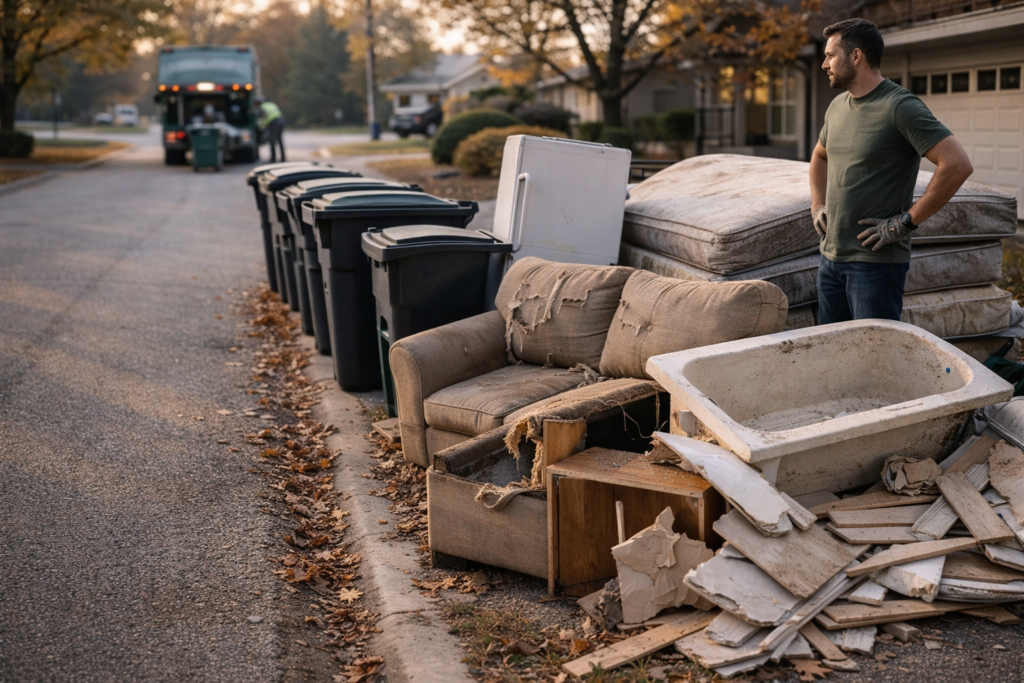
Municipal curbside collection is designed for everyday household garbage — kitchen scraps, packaging, and the occasional broken small appliance. Most cities enforce strict limits on the weight, size, and volume of items placed at the curb. When your project generates debris that exceeds those limits, a dumpster rental becomes the safest and most efficient option.
Common scenarios that push homeowners past the curbside threshold include whole-home decluttering projects, roof replacements, bathroom or kitchen remodels, storm damage cleanup, and large-scale landscaping overhauls. In each of these situations, the sheer volume and weight of waste make standard garbage service impractical — and sometimes illegal to use.
Types of Junk That Require a Dumpster
Construction and Demolition Debris
This is the single largest category of waste that demands a dedicated dumpster. Construction and demolition (C&D) debris includes drywall, lumber, plywood, concrete, brick, asphalt shingles, ceramic tile, metal framing, insulation, and broken glass. Even a modest bathroom remodel can generate hundreds of pounds of mixed C&D materials. A full roof tear-off on an average-sized home can produce two to three tons of old shingles alone.
Pro tip: Many haulers offer reduced rates for “clean” loads — meaning loads that contain only one material type, such as all concrete or all wood. If you can separate your debris, you may pay significantly less.
Old Furniture and Mattresses
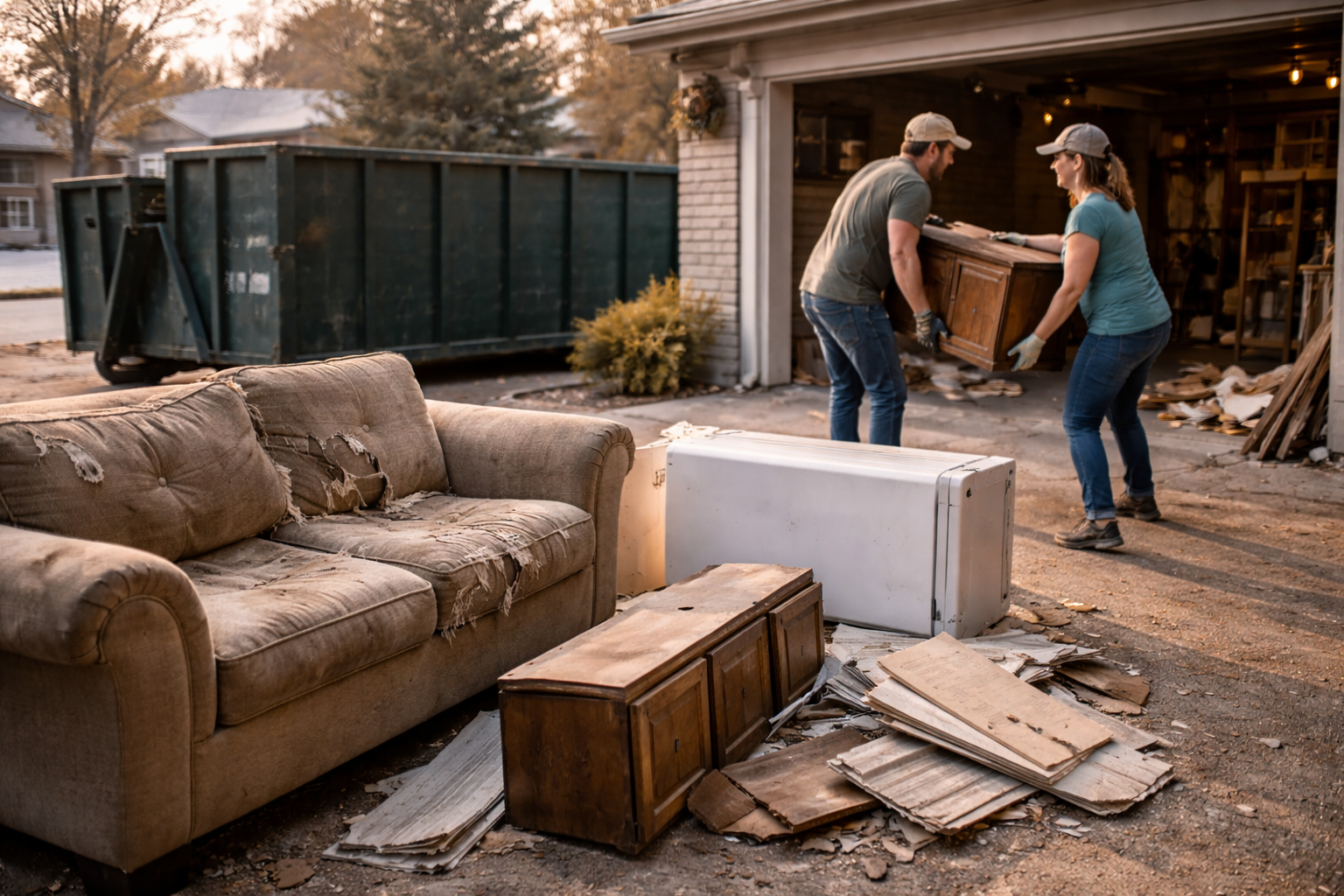
A single sectional sofa, a king-size mattress, a waterbed frame, a dining set with six chairs — large furniture items are awkward, heavy, and almost universally rejected by curbside pickup. During an estate cleanout or a move, it’s common to have a dozen or more oversized furniture pieces to dispose of at once. A 20-yard dumpster can typically handle the contents of a multi-bedroom home’s worth of unwanted furniture.
Appliances (Non-Freon Units)
Stoves, dishwashers, washing machines, dryers, water heaters, and microwaves are all generally accepted in dumpster rentals. These bulky metal appliances are heavy, difficult to transport, and take up enormous space. However, refrigerators, freezers, and air conditioning units contain refrigerant (Freon) and are regulated under federal law — most dumpster companies will not accept them unless the Freon has been professionally removed and certified.
Yard Waste and Landscaping Debris
Overgrown properties, tree removal projects, and major landscaping renovations create enormous volumes of organic waste. Tree stumps, branches, brush, sod, dirt, and gravel are all examples of heavy yard waste that quickly overwhelms standard yard waste bins. A single mature tree can fill an entire 30-yard dumpster. Dirt and gravel are especially tricky because of their weight; many haulers impose weight limits and charge overage fees, so it’s critical to discuss your project specifics before ordering.
Household Junk and General Clutter
Accumulated clutter is perhaps the most underestimated category. Broken toys, outdated electronics (TVs, monitors, printers), old clothing, books, boxes of paperwork, sporting equipment, holiday decorations, and random garage odds-and-ends add up faster than anyone expects. Hoarder cleanouts and estate cleanouts routinely fill 30- to 40-yard dumpsters — sometimes more than one.
Flooring Materials
Ripping out old carpet, hardwood, laminate, vinyl, or tile generates heavy, bulky waste. Carpet and padding from a 1,500-square-foot home can weigh over a thousand pounds. Tile and thinset are even heavier. Flooring removal is one of the most common reasons homeowners rent their first dumpster.
Roofing Materials
Old shingles, underlayment, flashing, and rotted decking boards are dense and cumbersome. Most roofing contractors include dumpster rental in their project estimates for precisely this reason. If you’re doing a DIY roof job, plan for at least a 20-yard container.
What Size Dumpster Do You Need?
Choosing the right dumpster size prevents overpaying for unused space or running out of room mid-project. Here’s a practical breakdown:
10-Yard Dumpster — Best for small cleanouts, single-room renovations, or moderate yard work. Holds roughly 3 pickup truck loads of debris.
20-Yard Dumpster — The most popular residential size. Ideal for mid-size remodels, multi-room decluttering, flooring removal, and roof replacements on smaller homes. Holds roughly 6 pickup truck loads.
30-Yard Dumpster — Suited for large home renovations, estate cleanouts, new construction waste, and major landscaping projects. Holds roughly 9 pickup truck loads.
40-Yard Dumpster — Reserved for commercial projects, whole-home cleanouts, large-scale demolition, and multi-property work. Holds roughly 12 pickup truck loads.
When in doubt, size up. The cost difference between a 20-yard and a 30-yard container is often surprisingly small compared to the expense and hassle of ordering a second dumpster.
Items You Should Never Put in a Dumpster
Knowing what’s prohibited is just as important as knowing what’s allowed. Placing banned items in a dumpster can result in additional fees, load rejection, or even legal penalties.
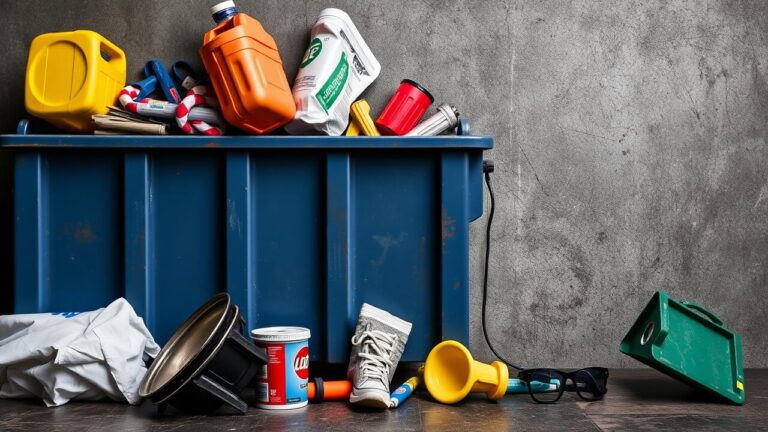
Hazardous materials top the restricted list. This includes paint, solvents, pesticides, motor oil, antifreeze, batteries (especially car batteries), propane tanks, and any chemical containers. Medical waste such as needles and pharmaceuticals is also universally banned. Tires are prohibited by most haulers due to landfill regulations, though some companies will accept them for an extra fee. Electronics containing hazardous components, such as CRT monitors and certain older TVs, may also be restricted depending on your state’s e-waste laws.
Always ask your dumpster rental provider for a complete list of accepted and prohibited items before loading begins.
How to Save Money on Your Dumpster Rental
Smart planning goes a long way toward keeping your costs down. Schedule your rental for a weekday if possible — some companies offer lower rates during off-peak periods. Fill the dumpster evenly and break down large items to maximize space. Avoid mixing heavy materials like concrete with lighter household junk, as this increases the risk of exceeding weight limits. Compare quotes from at least three local providers, and read the fine print regarding rental duration, weight allowances, and overage charges.
Donating or selling items that are still usable before tossing the rest can also reduce volume and potentially earn you a tax deduction.
When to Hire a Junk Removal Service Instead
A dumpster rental is a DIY solution — you load it yourself on your own schedule. If you’d rather have someone else do the heavy lifting, a full-service junk removal company will send a crew to haul everything away for you. This option tends to cost more per cubic yard but saves significant labor time. It’s particularly useful for seniors, people with physical limitations, or anyone facing a tight timeline.
The rule of thumb: if the project will take several days and you want full control over pacing, rent a dumpster. If you want everything gone in a single afternoon, hire a junk removal crew.
Frequently Asked Questions
What junk requires a dumpster instead of regular trash pickup?
Any waste that exceeds your municipality’s curbside size, weight, or volume limits typically requires a dumpster. The most common examples are construction debris, old furniture, appliances, roofing materials, flooring, large quantities of yard waste, and whole-home cleanout junk.
What size dumpster do I need for a home cleanout?
For most single-family home cleanouts, a 20-yard dumpster is sufficient. Larger homes, estate cleanouts, or hoarder situations may require a 30-yard or 40-yard container. When unsure, ask your rental provider for a recommendation based on the square footage and scope of your project.
Can I put a mattress in a dumpster?
Yes, mattresses are accepted in most standard dumpster rentals. However, some states — including California, Connecticut, and Rhode Island — have mattress recycling laws that may affect disposal options. Check local regulations before tossing one in.
How much does it cost to rent a dumpster?
Prices vary widely by region, size, and rental duration. On average, a 20-yard dumpster costs between $300 and $600 for a seven-day rental period. Additional days, excess weight, and certain debris types can increase the total.
Can I put electronics in a dumpster?
Many electronics are accepted, but items containing hazardous materials — such as CRT televisions, certain batteries, and mercury-containing devices — are often prohibited. Check with your hauler and your state’s e-waste disposal laws.
Is it cheaper to rent a dumpster or hire a junk removal service?
For large volumes of waste that you can load yourself, a dumpster rental is almost always more cost-effective. Junk removal services charge for labor in addition to disposal, making them pricier per cubic yard but more convenient if you lack the time or ability to do the work yourself.
Ready to Get Rid of Your Junk the Right Way?
If your next project involves any of the bulky, heavy, or high-volume waste described above, a dumpster rental is the smartest move you can make. Stop making countless trips to the landfill, stop stuffing your curbside bin past the breaking point, and stop letting that pile of debris sit in your driveway for weeks.
Get a free, no-obligation dumpster rental quote today. Compare local providers, choose the right size for your project, and get that junk gone — on your schedule, within your budget, and without the headache. Your cleanout starts now.